



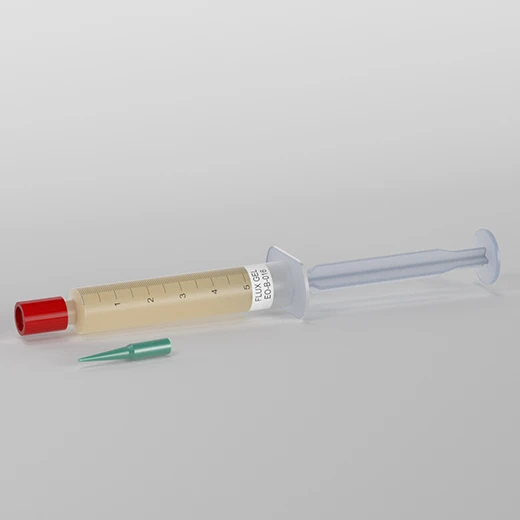
"Our flux gels are often used for repair work on assembled PCBs. In the past, special manual and repair fluxes often had to be used. However, these contain different activators than the fluxes used for series production."
Markus Geßner, Head of Marketing and Sales at Emil Otto GmbH
This can often lead to undesirable cross-reactions, some of which may only occur at a later stage. The new flux gels developed by Emil Otto EO-G-006 and EO-B-016 are each based on activators that are contained in the previous electronic flux groups EO-G-006 and EO-B-016. This means that cross-reactions can be avoided.
At the EO-B-016 is an alcohol-based flux that can be used to EO-G-006 on the other hand, is a water-based flux.
"In this respect, the flux gel EO-G-006 is an absolute innovation. It is the first flux gel of a water-based flux and, as far as we know, Emil Otto is the only flux manufacturer that can offer such a gel to its customers. All flux gels are not subject to any dangerous goods class, regardless of whether the original flux was formulated on an alcohol or water basis. Therefore, simplified transportation and conventional storage of the gels are possible, which in turn represents considerable added value for our customers."
Markus Geßner
Emil Otto is therefore the only manufacturer that Water-based flux products on a specific activator basis The product range includes everything from the flux concentrate and the finished flux to the flux gel. The standardized activators prevent cross-reactions that can occur when using different activators from different products.
"There is a further advantage in terms of certification. If the fluxes EO-G-006 and EO-B-016 are approved and certified for series production, this also applies to the associated flux gels, as these are produced on the basis of the same formulation."
Markus Geßner
The flux gel EO-G-006, which is now available, is based on the proven activator technology of the flux series EO-G-006 (A-C) and impresses with its high concentration and outstanding wetting and spreading properties. Thanks to its unique No Clean formula, it leaves no sticky residue and guarantees perfect soldering results.
"The flux can be applied efficiently and precisely. Using a metal dosing needle, it can be used sparingly and applied in a targeted manner. It is therefore ideal for repair work, dip tinning and selective wave soldering."
Markus Geßner
It also prevents the formation of crystals. The gel activates even contaminated pads and component pins and supports critical soldering processes.
The flux gel EO-B-016, which is also available immediately, is based on the proven activator base of the flux series EO-B-016 (A-C). It is characterized by high wetting and spreading efficiency, leaves no sticky residue and guarantees perfect soldering results. The No Clean formula meets the highest quality standards and, like EO-G-006, can be used for repair work, dip tinning and selective wave soldering.
"This flux gel is also characterized by the fact that it does not form crystals and offers long-lasting product quality."
Markus Geßner
The flux gels are supplied in practical 5g syringes and can be processed at room temperature. With a minimum shelf life of 12 months, the flux gels are ideal for professional requirements.
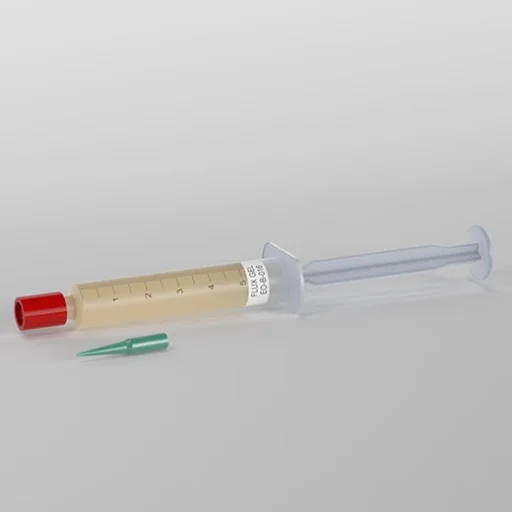
Flux gel EO-B-016
Repair work on printed circuit boards, dip tinning
No Clean-Flux gel
Highly active, halide-free activated (WEEE/RoHS compliant)
Type ISO-9454: 2131 DIN EN 61190-1-1 (acc. J-STD004): REL0
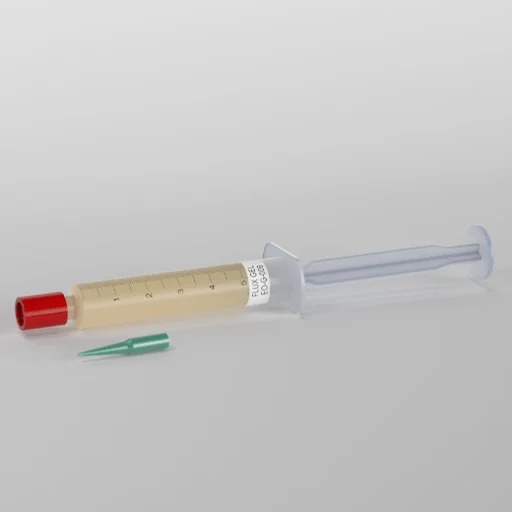
Flux gel EO-G-006
Repair work on printed circuit boards, dip tinning
No Clean-Flux gel
Highly active, halide-free activated (WEEE/RoHS compliant)
Type ISO-9454: 2131 DIN EN 61190-1-1 (acc. J-STD004): ORL0