



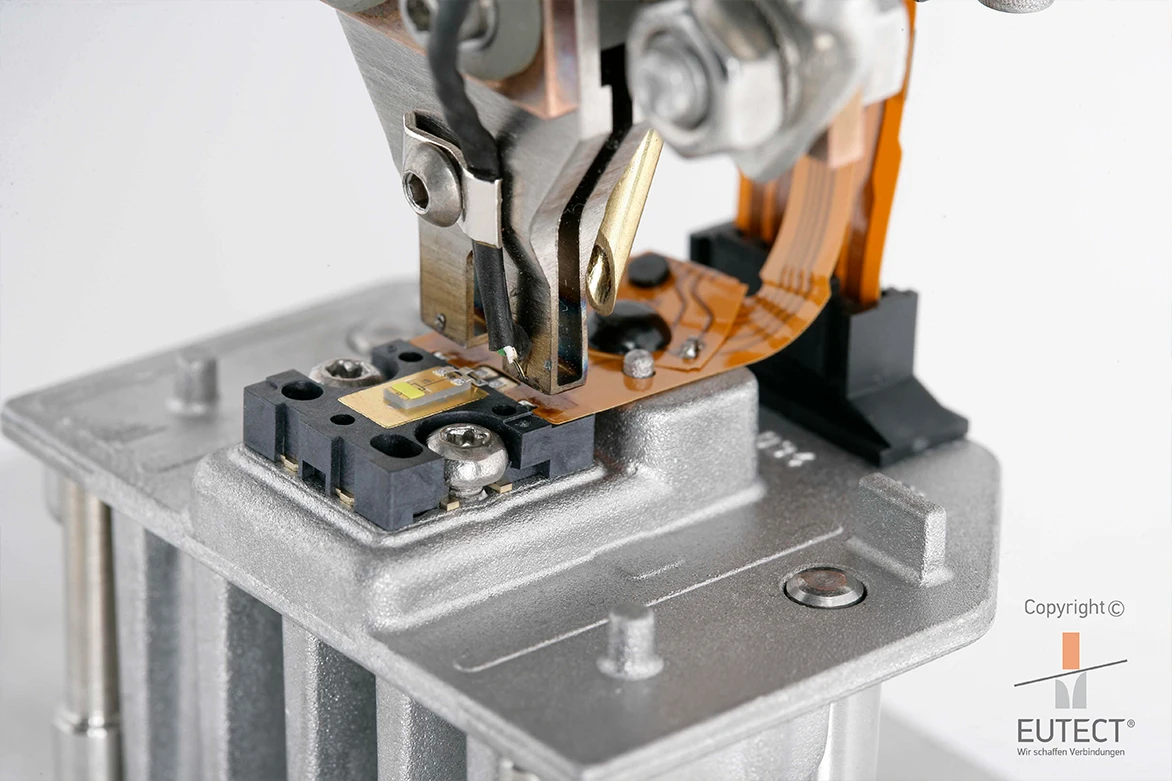
The use of flux during thermode soldering removes oxide layers and impurities to enable optimum wetting of the solder. As the solder flows evenly, a stable joint is created. The HTW-48 and HTW-49 fluxes therefore make a significant contribution to improved soldering quality. This is particularly important for materials such as uncoated copper wires or lead-free solder joints, as these are more susceptible to oxidation. The fluxes offered in various packaging units are often used in semi-automatic thermode soldering processes, where they are applied manually. HTW-48 and HTW-49 are also available as a flux pen, which makes application particularly easy.
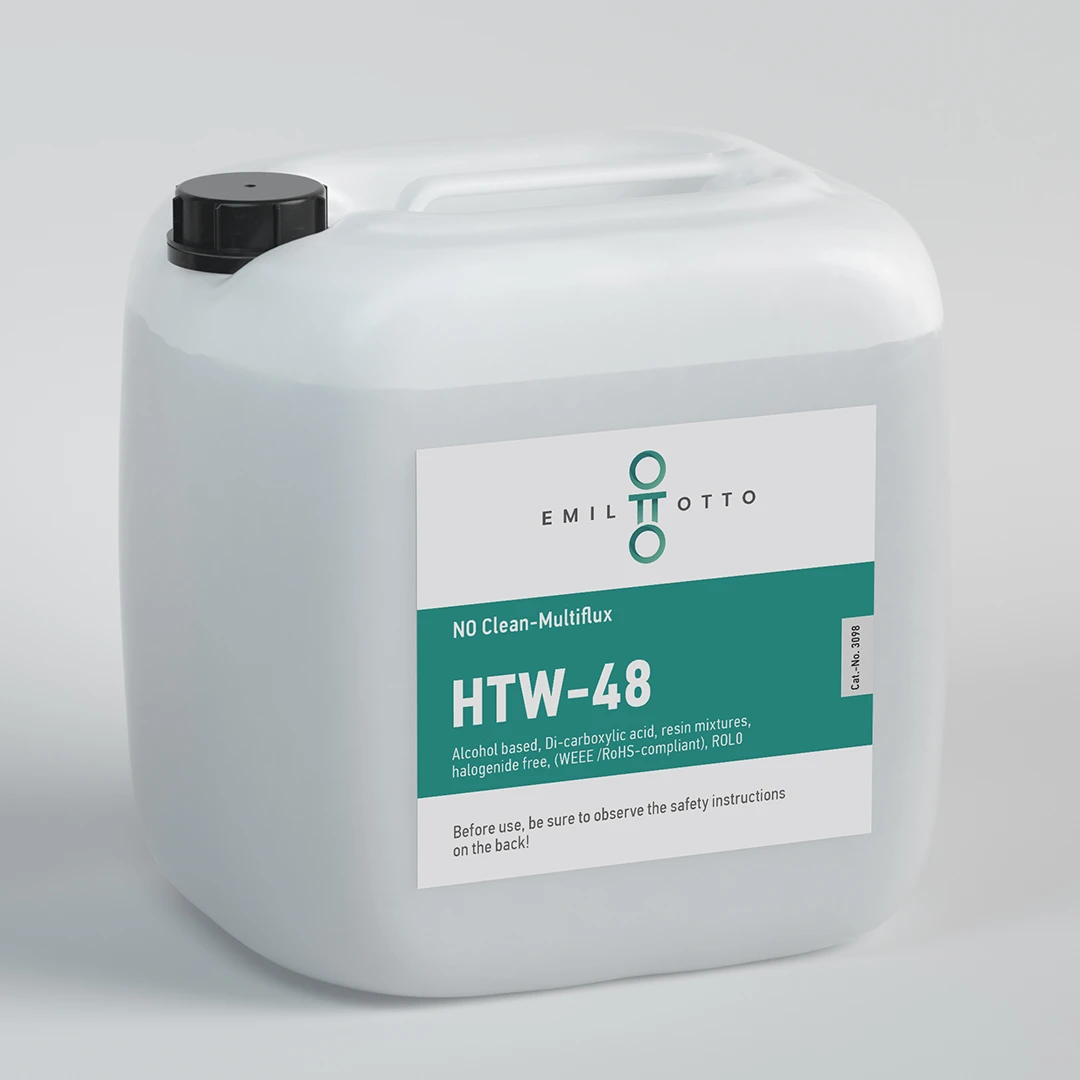
HTW-48
Selective and manual soldering, dip tinning, strand tinning
No Clean-Flux with halide-free activators (WEEE /RoHS-compliant)
Type ISO-9454: 1131 DIN EN 61190-1-1 (acc. to J-STD 004) ROL0
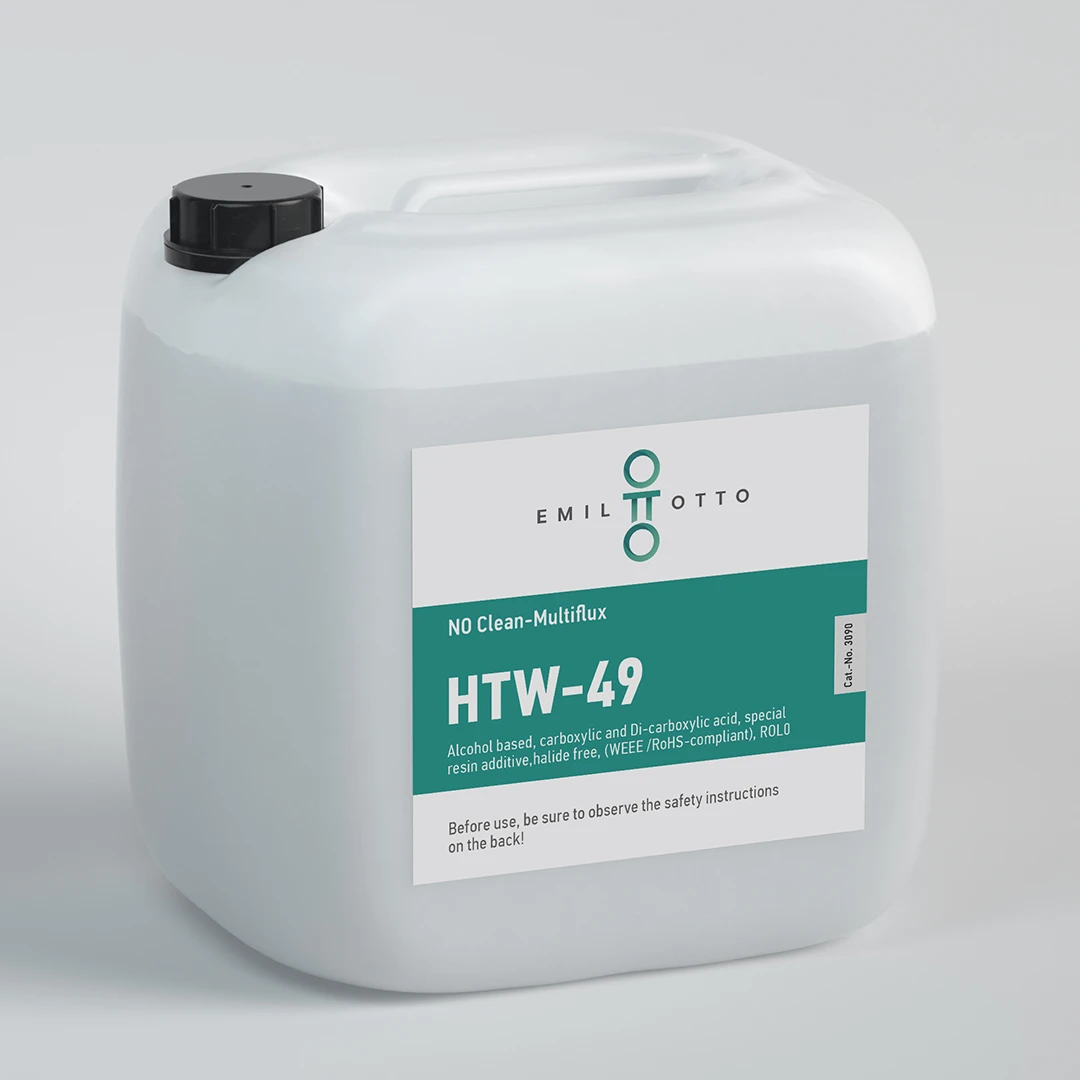
HTW-49
Selective and manual soldering, dip tinning, strand tinning
No Clean-Flux with halide-free activators (WEEE /RoHS-compliant)
Type ISO-9454: 1131 (1.1.3.A) DIN-EN 61190-1-1 (acc. J-STD-004): ROL0
Especially for selective soldering processes and cable assembly
The HTW-48 and HTW-49 fluxes contain halide-free activators. They were specially developed for selective soldering processes and cable assembly - in particular for strand tinning. While the activators in HTW-48 consist of (di-)carboxylic acids, HTW-49 was formulated with the activators rosin, carboxylic acids and (di-)carboxylic acid complex with a special resin additive.
Suitable as flux gels for repair tasks on assembled printed circuit boards
Both fluxes are also available as gels for reworking, which are particularly suitable for repair work on assembled PCBs. In the past, it was often necessary to use fluxes for manual and repair soldering, which, however, use different activators. By using standardized activators, cross-reactions can be avoided, which can occur when using different activators from different products.
The new flux gels are based on the activator formulation of the HTW-48 and -49 fluxes and are characterized by very good wetting and spreading properties. Due to the highly concentrated formulation, they should be applied sparingly. They are dispensed using a metal dispensing needle, which enables precise positioning of the flux. Both flux gels are classified as ROL0 in accordance with DIN EN 61190-1-1 (J-STD-004) and comply with WEEE and RoHS regulations.
The HR/D-110 flux, which has been available on the market for a long time and is suitable for iron and thermode soldering, is a tried and tested Emil Otto flux for selective soldering. It also achieves very good results in terms of penetration and wetting in thermode soldering. The residue behavior is excellent.