
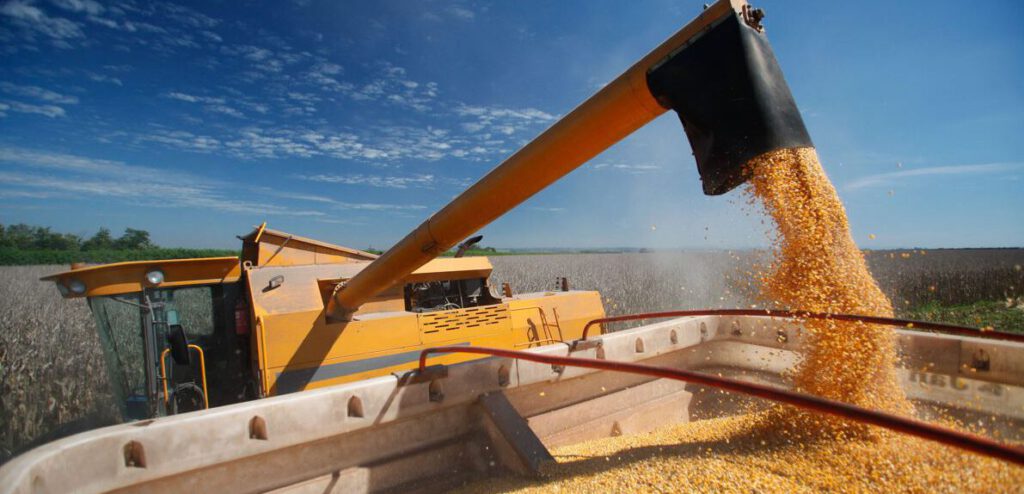
Bioethanol, also known as bio-alcohol, refers to ethanol produced exclusively from biomass or, in rare cases, from biodegradable waste. Biomass usually consists of wheat, corn, or rapeseed grown specifically for the production of bioethanol. "This form of production is not sustainable, which is no longer a secret," says Markus Geßner, Head of Marketing and Sales at Emil Otto GmbH. The same applies to the production of biofuels as an alternative to fossil fuels. These are produced from the same raw materials. Therefore, the CO₂ opportunity costs of biofuels, for example, can also be attributed to bioethanol. The CO₂ opportunity costs refer to the potential carbon sequestration resulting from the restoration of agricultural land. These correspond to the potential carbon sequestration lost due to the continued use of biofuels or bioethanol.
In a study on the CO₂ opportunity costs of biofuels in Germany published in 2022, the ifeu - Institute for Energy and Environmental Research Heidelberg GmbH[1] found that the cultivation of raw materials for the production of biofuels resulted in a saving in greenhouse gas emissions of 9.2 million tons of CO₂-eq. However, if the land used for this were to be used for the growth of natural vegetation, an average annual carbon sequestration of over 16 million tons of CO₂ would be possible. This means that the CO₂ opportunity costs of biofuel production are significantly higher than the reduction in emissions. In addition, the large areas under cultivation reduce biodiversity while increasing water consumption. "The water requirement is enormous, as 3500 liters of water are needed for one liter of biofuel or bioethanol, depending on the weather and region," explains Mr. Geßner.
As a recreational beekeeper, Mr. Geßner is also very aware of the issue of biodiversity from his own experience: "We're all talking about bees dying off. We now also know what impact this has on our lives. Nevertheless, vast monocultures are still being cultivated to ultimately produce bioethanol. Not only are pesticides and similar substances used to ensure crop yields, but they also have a negative impact on species diversity and biodiversity. However, we believe that the use of bioethanol is wrong not only for ecological reasons but also for ethical reasons. After all, it has been proven that the heavy use of agricultural land for these products drives up food prices." Sufficient reasons for Emil Otto to do without bioethanol as a raw material for alcohol-based fluxes. "It is questionable when chemical products are labeled as "organic" simply because bioethanol has been added. We manufacturers must therefore take a close look at what we process. I am not accusing anyone of greenwashing. However, I think it is wrong to label a demonstrably unsustainable product as "organic" for marketing reasons," emphasizes Mr. Geßner.
"Our alcohol-based electronic fluxes are produced almost exclusively with isopropyl alcohol because of its properties," says Mr. Geßner. However, he also points out that for a few products, small quantities of bioethanol must also be processed by Emil Otto: "According to our research, for more than 10 years we have been receiving ethanol derived primarily from agricultural resources, as ethanol produced using other methods is rarely available in its pure, unblended form."
[1] https://www.ifeu.de/projekt/co2-opportunitaetskosten-von-biokraftstoffen-in-deutschland/
Image source: Shutterstock