Emil Otto expands successful fluxes with further variants
With versions A and B of the alcohol-based fluxes EO-B-008 and EO-B-013, the Hessian flux specialist enables even better adaptation to the soldering process in electronics production. Emil Otto is thus continuing to pursue the consistent path of different heights of solids content in the fluxes in order to be able to offer its customers an extended standard product for the respective soldering process.
The EO-B-008 has a high solids content of 4 wt.-% and was specially developed for short-cycle wave soldering systems. It is ideal for applications where the PCB spends a long time in the preheating phase before the soldering process takes place in a particularly active solder wave. "By using the EO-B-008, excellent solder joints are achieved, while the PCB has an extremely clean, residue-free surface after the soldering process. This contributes significantly to the high quality and reliability of the end product. In order to optimize this quality even further, we have decided to develop further variants of the EO-B-008," explains Markus Geßner, Head of Marketing and Sales at Emil Otto GmbH.
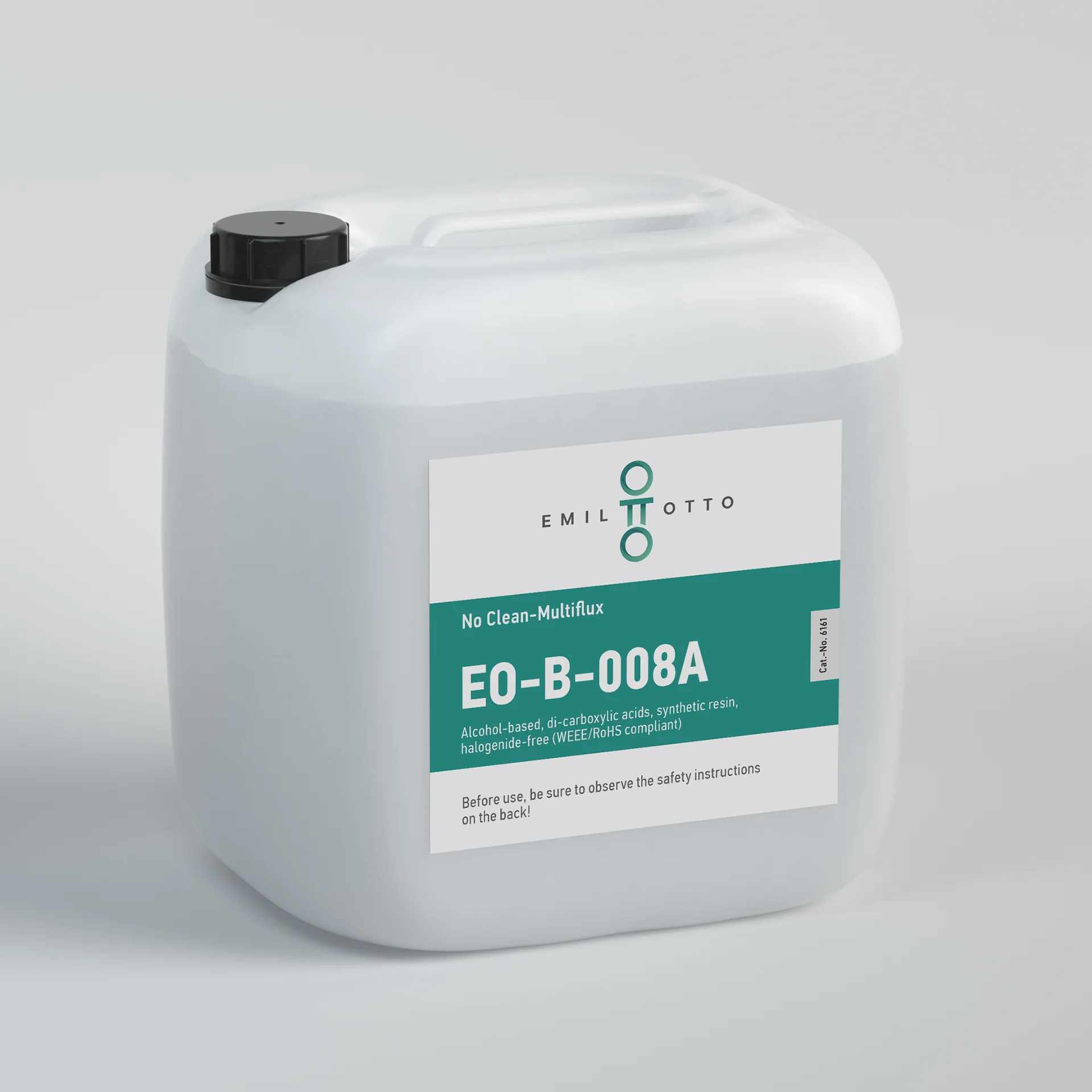
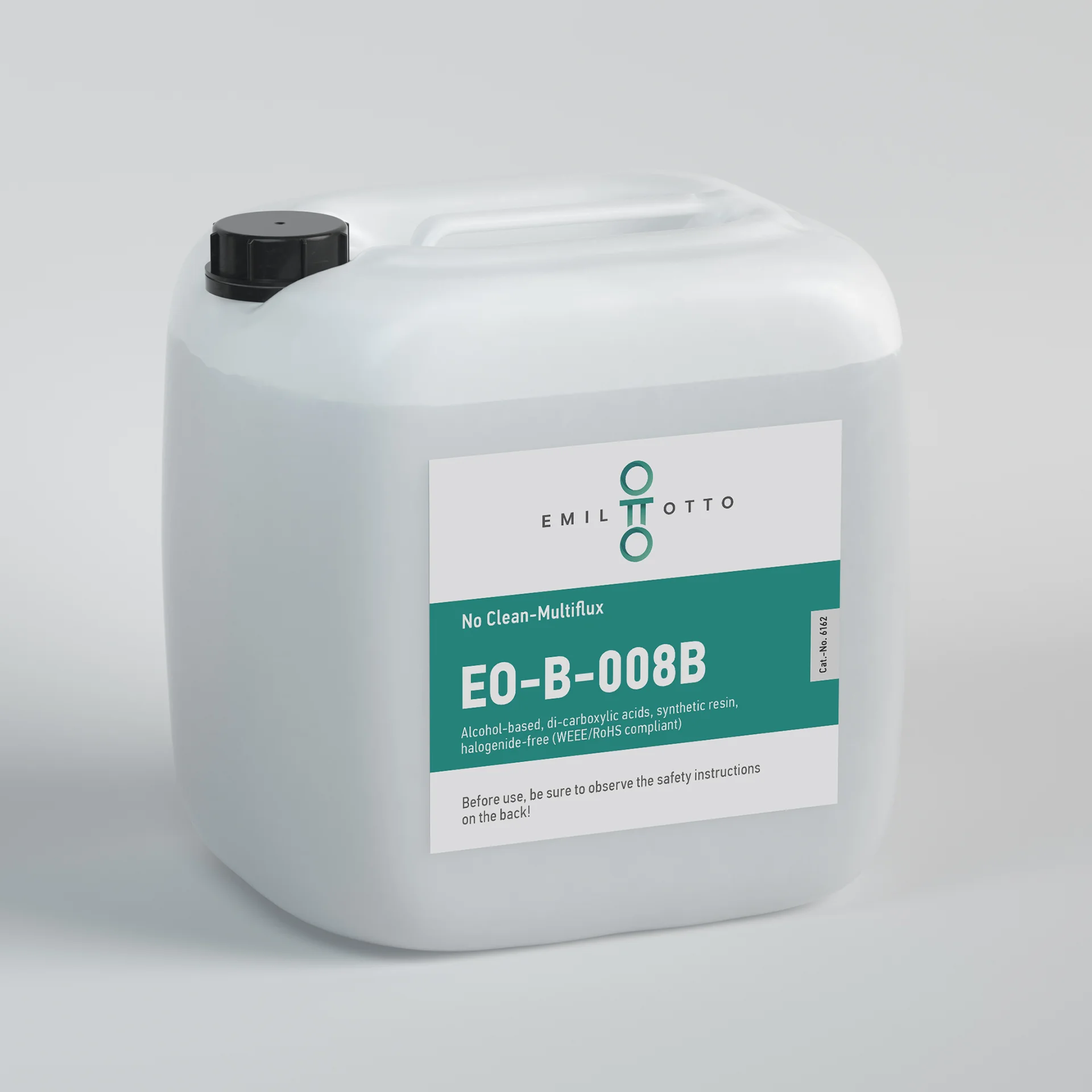
This is how the EO-B-008A a solids content of 2%. This is a high-performance no-clean flux based on alcohol with di-carboxylic acids and synthetic resin. This flux was developed for wave soldering processes as well as for dip soldering processes and strand tinning. The same applies to the version EO-B-008Bwhich has a solids content of 3%. This flux is also versatile and can be used for wave soldering as well as for special applications with good results. The EO-B-008A variant has also been specially developed for full tunnel nitrogen applications and guarantees significantly better soldering results than conventional adipic acid solutions under full nitrogen thanks to a wide process window and high temperature stability.
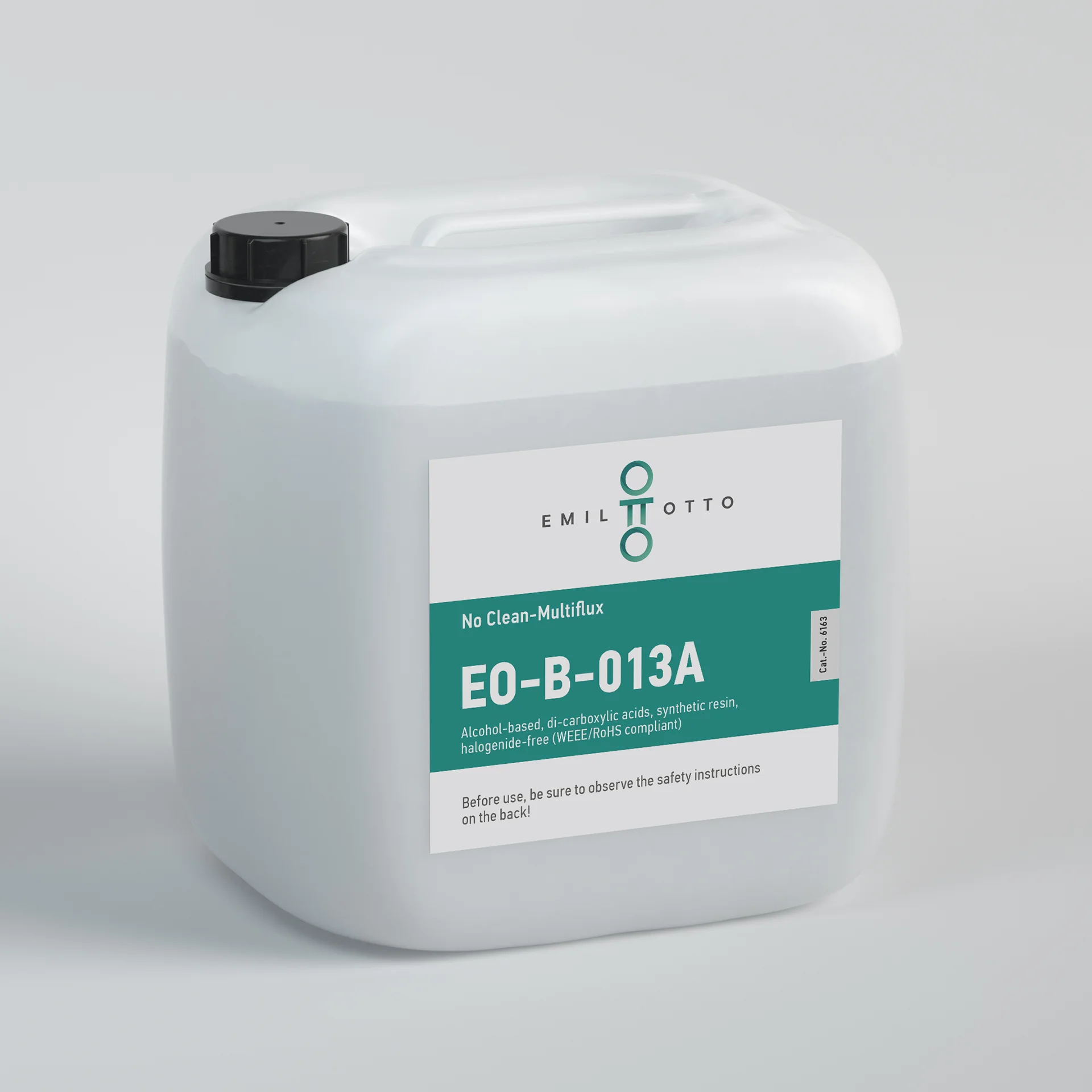
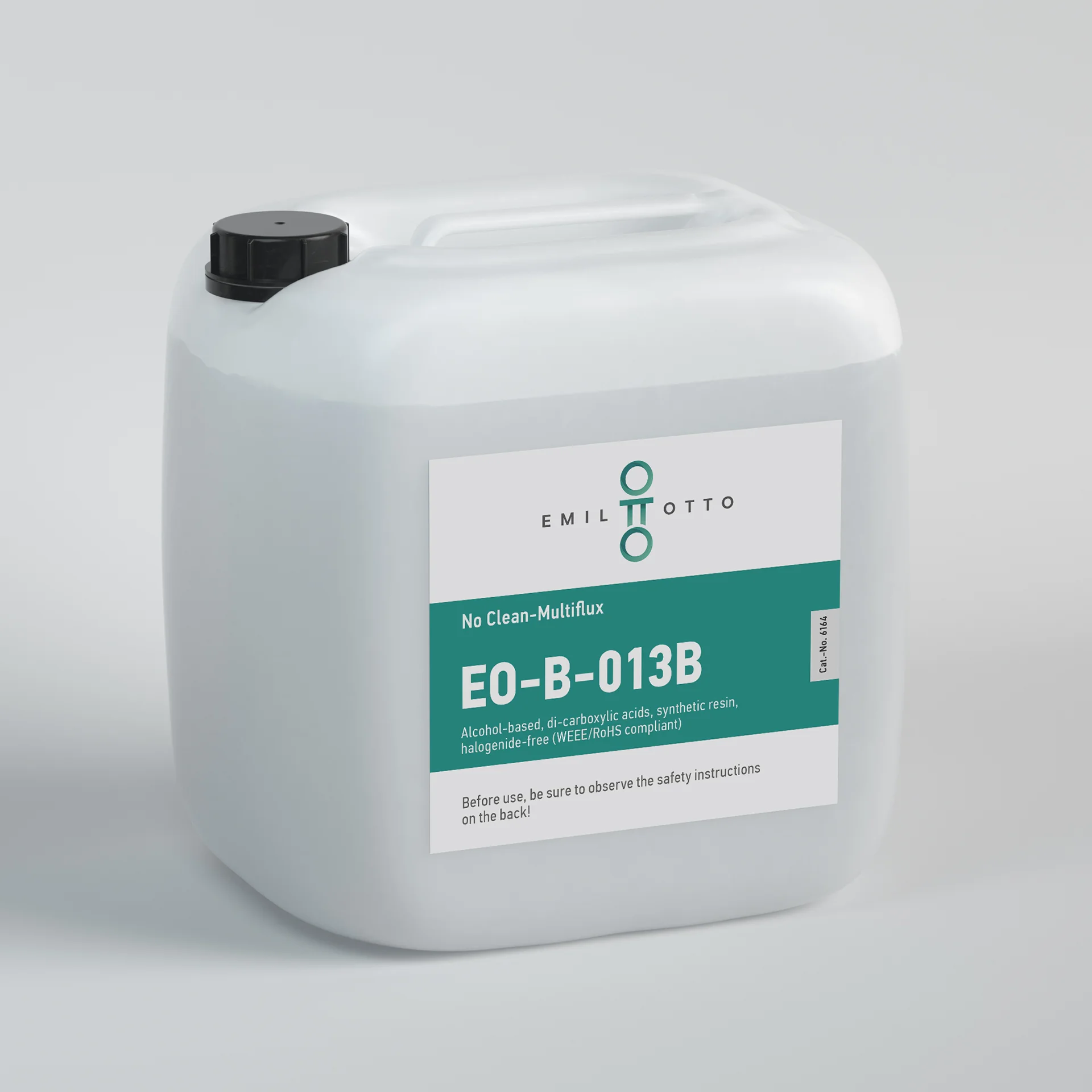
At the EO-B-013 is a multiflux with a focus on wave and selective soldering. The flux is also based on alcohol with di-carboxylic acids and a synthetic resin complex. The flux can also be used in the dip soldering process and for strand tinning in cable assembly. The flux is applied using the spray flux method. "EO-B-013 is also a no-clean flux with exceptional properties and excellent residue behavior. Here, too, we are now offering versions A and B," continues Geßner. The EO-B-013A has a solids content of 2% and, like the A variant of EO-B-008, has been specially developed for full-tunnel nitrogen applications that require Version B has a solids content of 3%.
All A and B variants of fluxes EO-B-008 and EO-B-013 are available in canisters of 5 and 20 liters. Other containers are available on request.