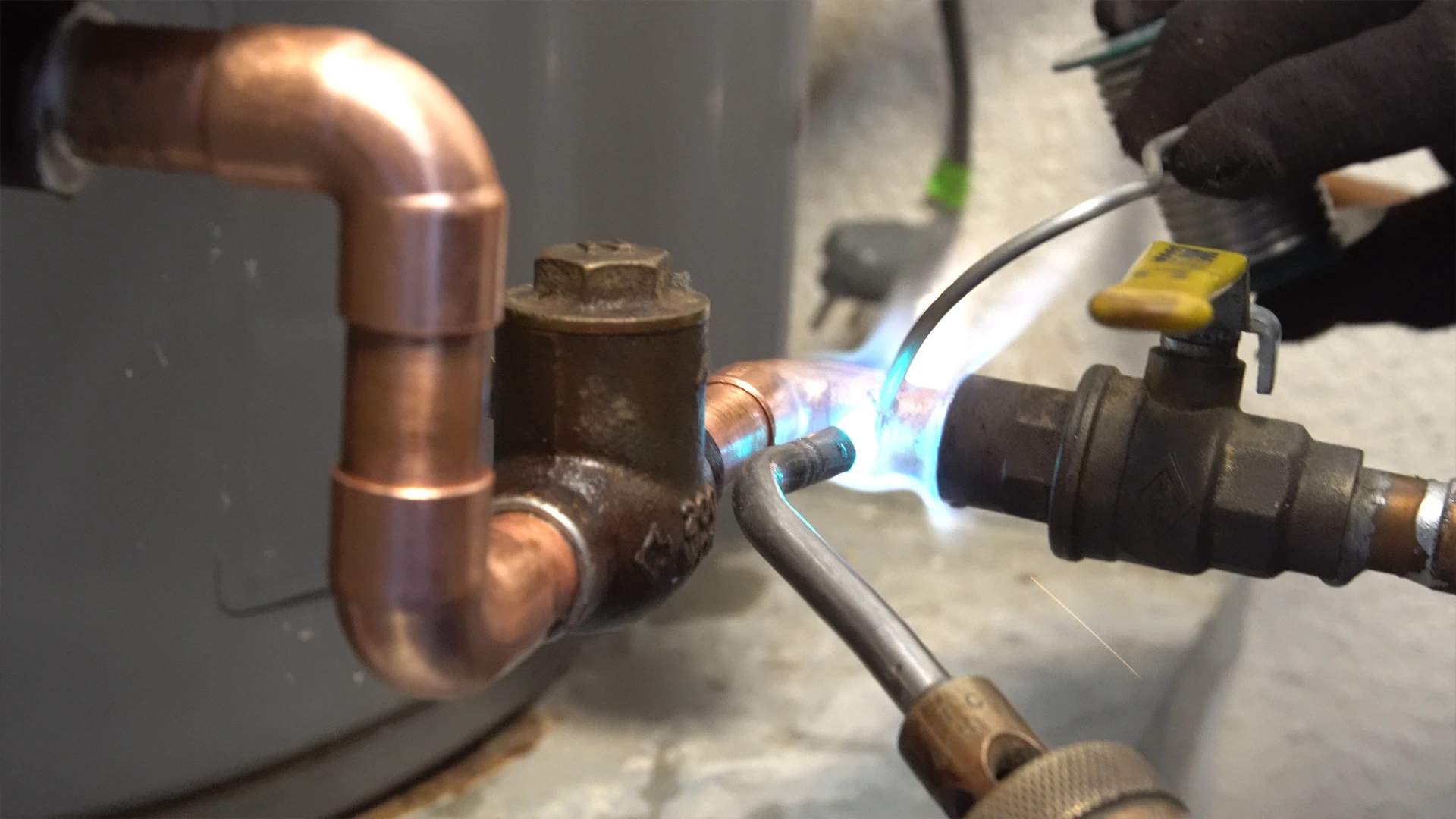
Soft soldering in pipeline construction is particularly suitable for soldering copper pipes and brass fittings. This soldering process creates a stable and reliable connection between the pipe parts. As soft soldering is carried out at temperatures between 180 and 250 °C, the thermal load is comparatively low.
The solder joint must be carefully prepared before the actual soldering. The surfaces to be joined should be thoroughly cleaned of oxides, dirt and grease. This can be done with a wire brush, for example. A suitable flux is then applied, which prevents oxide formation during heating and allows the solder joint to be evenly wetted with the solder.
A recommended product for this is the soldering and tinning paste ZINNIN GREEN I Sn100 from Emil Otto. This ready-to-use paste consists of 100 % pure tin (Sn100) and is both lead-free and zinc-free, which means it complies with the WEEE/RoHS directives. It is particularly suitable for soft soldering and tinning steel, stainless steel, brass and copper alloys.
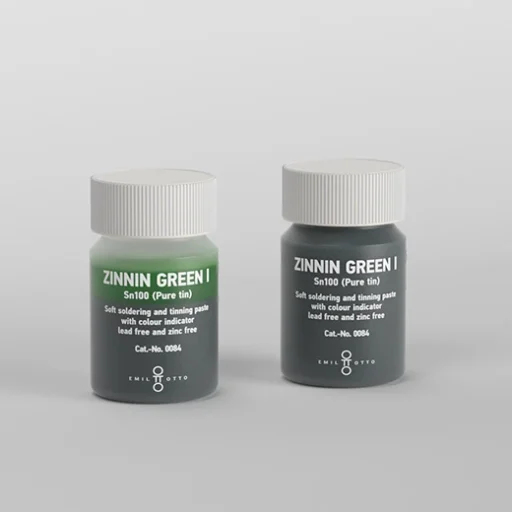
ZINNIN GREEN I Sn100 (metal)
Conventional soft soldering and tinning of steel, stainless steel, brass and copper alloys
Ready to use and completely label-free soldering and tinning paste with Sn100 (pure tin)
Lead-free and zinc-free (WEEE/RoHS compliant)
Type ISO-9454: 2123
A particular advantage of the ZINNIN GREEN I Sn100 paste is its ease of use. Before use, the paste is stirred until the green color of the usage indicator changes to metallic silvery-grey and a uniform consistency is ensured. It is applied directly to the parts to be joined using a brush or other suitable tool. Thanks to the high activity of the flux it contains, the paste spreads excellently on the surfaces. In addition, it does not drip and therefore enables clean working.
Another added value is the label-free formulation of the paste, which is why it is not classified as a hazardous material. In addition, flux residues are visible under UV light and can be easily removed with deionized water if necessary. These properties make ZINNIN GREEN I Sn100 a safe and efficient choice for high-quality soldered joints in pipeline construction.
Our solution
Discover Emil Otto's products and solutions for safe and reliable soft soldering processes in a variety of applications.